The post-workout myth
Walk into any gym locker room and you will hear the same advice: soak in Epsom salts after your workout to ease sore muscles. The recommendation has been repeated so often it feels like established science. It is not. The timing is wrong, and the reasoning is incomplete. Magnesium bath salts are powerful, but their real window of opportunity has nothing to do with the gym and everything to do with the hours before sleep.
The confusion stems from conflating two different goals. Post-exercise, your body is in a state of acute inflammation — elevated core temperature, increased blood flow, heightened sympathetic nervous system activity. Dropping into a warm bath at that point does not accelerate recovery. It competes with the body’s own cooling and repair mechanisms. What you actually need after a hard session is cold exposure, hydration and protein. The warm soak belongs elsewhere in your day.
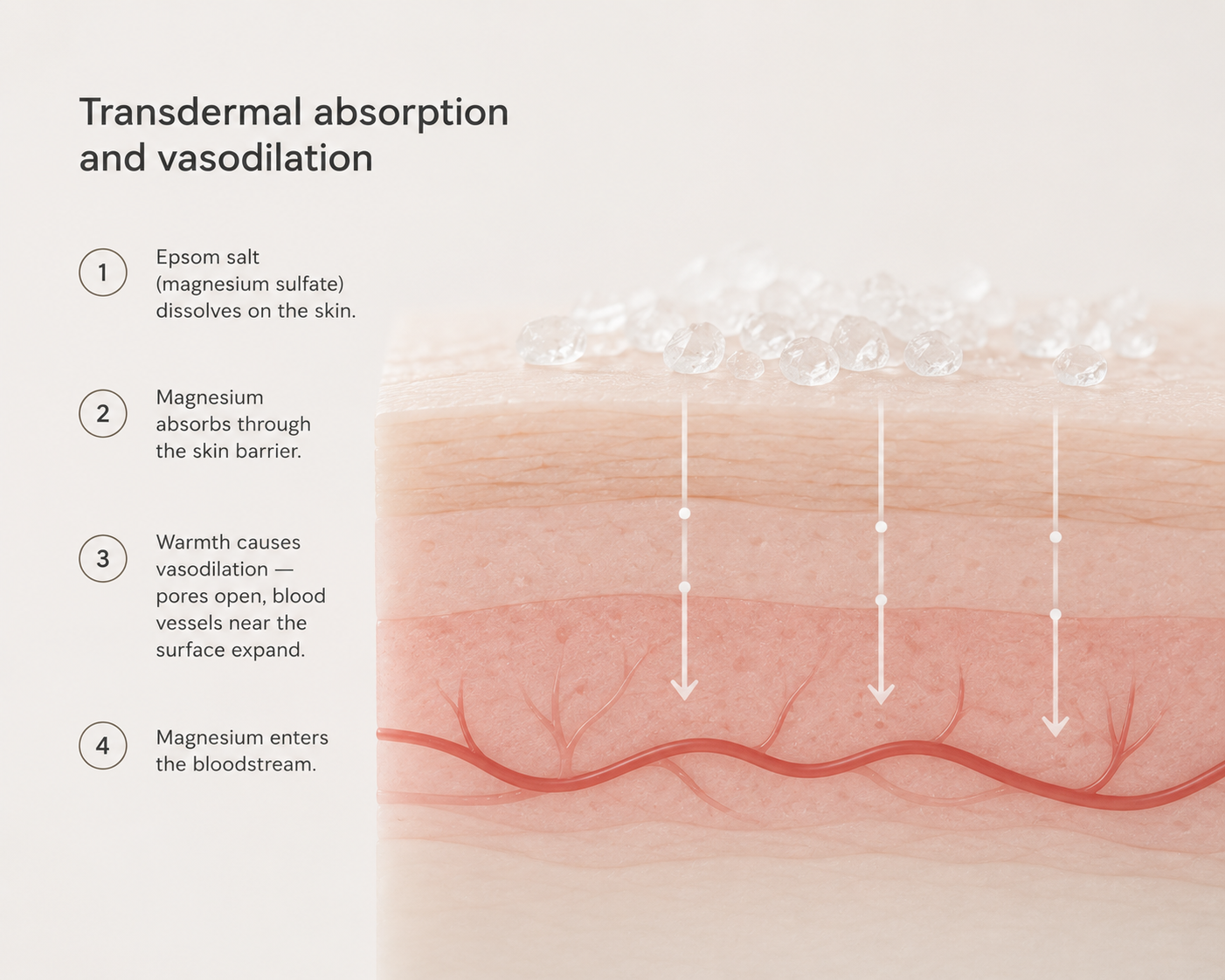
Transdermal absorption and vasodilation
Magnesium sulfate — the active compound in Epsom salt — can cross the skin barrier and enter the bloodstream. This transdermal pathway bypasses the digestive system entirely, avoiding the gastrointestinal discomfort that high-dose oral magnesium can cause. But the rate of absorption depends heavily on one variable: skin vasodilation.
When skin is warm, blood vessels near the surface dilate. Pores open. The permeability of the stratum corneum — the outermost layer of skin — increases measurably. Research published in the Journal of Integrative Medicine confirms that warm-water immersion at 37–39°C significantly enhances transdermal mineral uptake compared to cooler temperatures. The evening is when most people can sustain a warm, unrushed soak — and when the body is naturally winding down toward parasympathetic dominance.
Why the evening window works
Between 8pm and 10pm, the human body is already shifting gears. Cortisol is declining. Core body temperature has peaked and is beginning its nightly descent. Melatonin production is ramping up in response to dim light cues. This is the ideal biochemical environment for a magnesium bath. The warm water amplifies vasodilation, the magnesium absorbs efficiently, and the entire experience reinforces the parasympathetic signals your nervous system is already sending.
Contrast this with the post-workout window. After intense exercise, cortisol is elevated, adrenaline is circulating, and your sympathetic nervous system is dominant. A warm bath at this point does not flip the switch to recovery mode — it extends the state of activation. The magnesium may still absorb, but your body is not in the right mode to use it for what matters most: deep, restorative sleep.
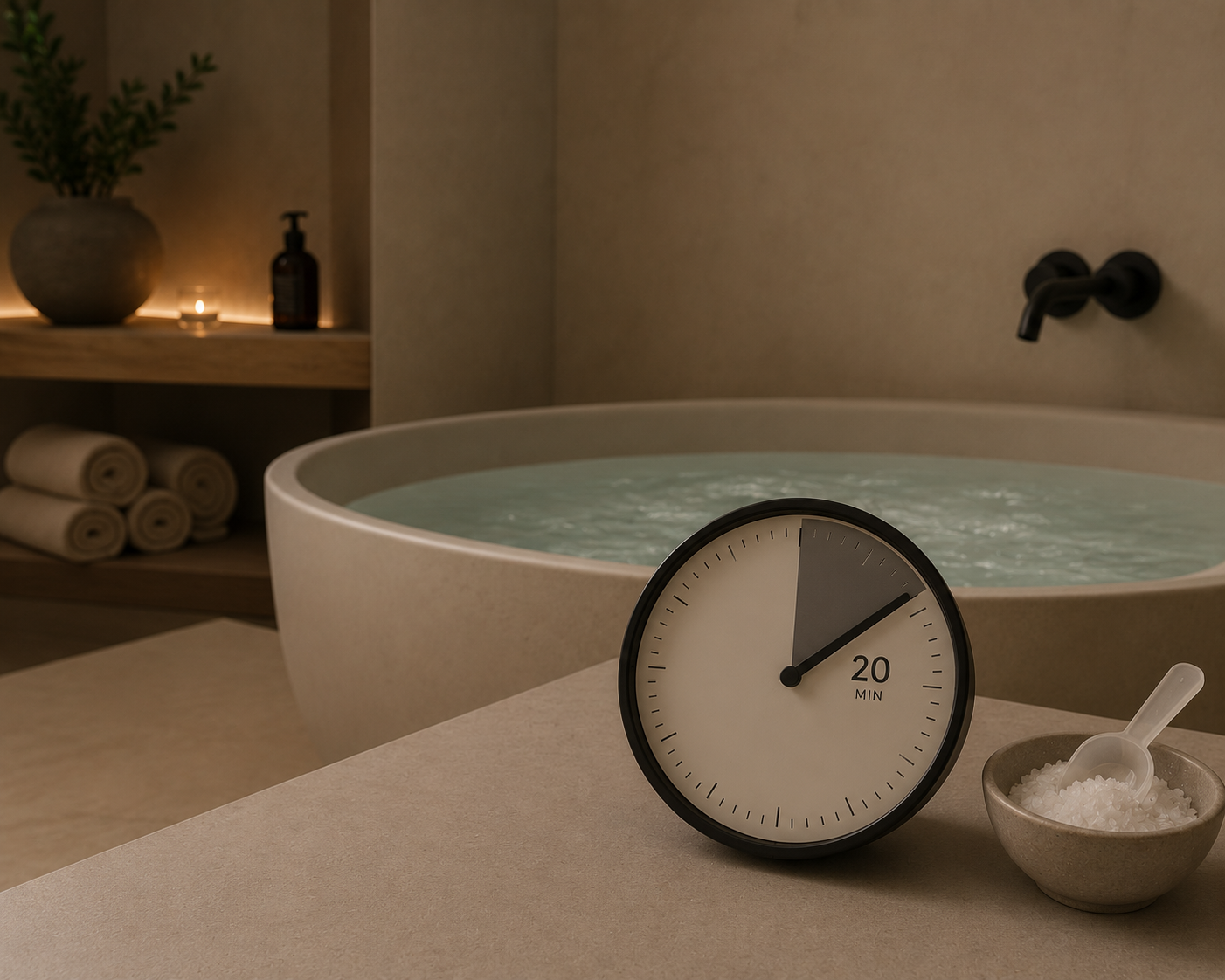
The 20-minute protocol
The protocol is simple but precise. Draw a bath at 37–39°C — warm enough to promote vasodilation but not so hot that it raises core temperature excessively. Add one scoop (approximately 50g) of magnesium bath salts and allow them to dissolve fully. Enter the bath and soak for 20 minutes. This duration is the sweet spot identified in transdermal absorption studies: long enough for meaningful magnesium uptake, short enough to avoid overheating or skin maceration.
After the soak, step out and allow your body to cool naturally. Do not towel off aggressively — pat dry and let the residual mineral film sit on the skin for a few minutes. This post-bath cooling period is critical. As your core temperature drops, your brain interprets the decline as a signal to release melatonin. The thermal drop from a warm bath to a cool bedroom is one of the most reliable sleep-onset triggers in chronobiology.
Parasympathetic activation
Magnesium is not merely a muscle relaxant. It is a cofactor in over 300 enzymatic reactions, including those governing GABA receptor activity. GABA is the primary inhibitory neurotransmitter in the central nervous system — the chemical that tells your brain to slow down. When magnesium levels are adequate, GABA binds more effectively to its receptors, producing a measurable calming effect. Combine this with the sensory experience of warm water, the scent of eucalyptus or lavender, and the quiet of an evening ritual, and you have a multi-channel parasympathetic intervention that no single supplement can replicate.
Timing is the missing variable
The wellness industry obsesses over ingredients — which salt, which mineral concentration, which essential oil blend. These matter, but they are secondary to timing. A perfectly formulated magnesium soak taken at the wrong time delivers a fraction of its potential. The same soak, taken in the 90 minutes before bed, becomes a cornerstone of sleep architecture. At still—room, every product is designed around when it is used, not just what it contains. The bath salt is an evening product. It belongs in the PM ritual, between your last screen and your first hour of sleep. That is where the science points, and that is where the benefit lives.